
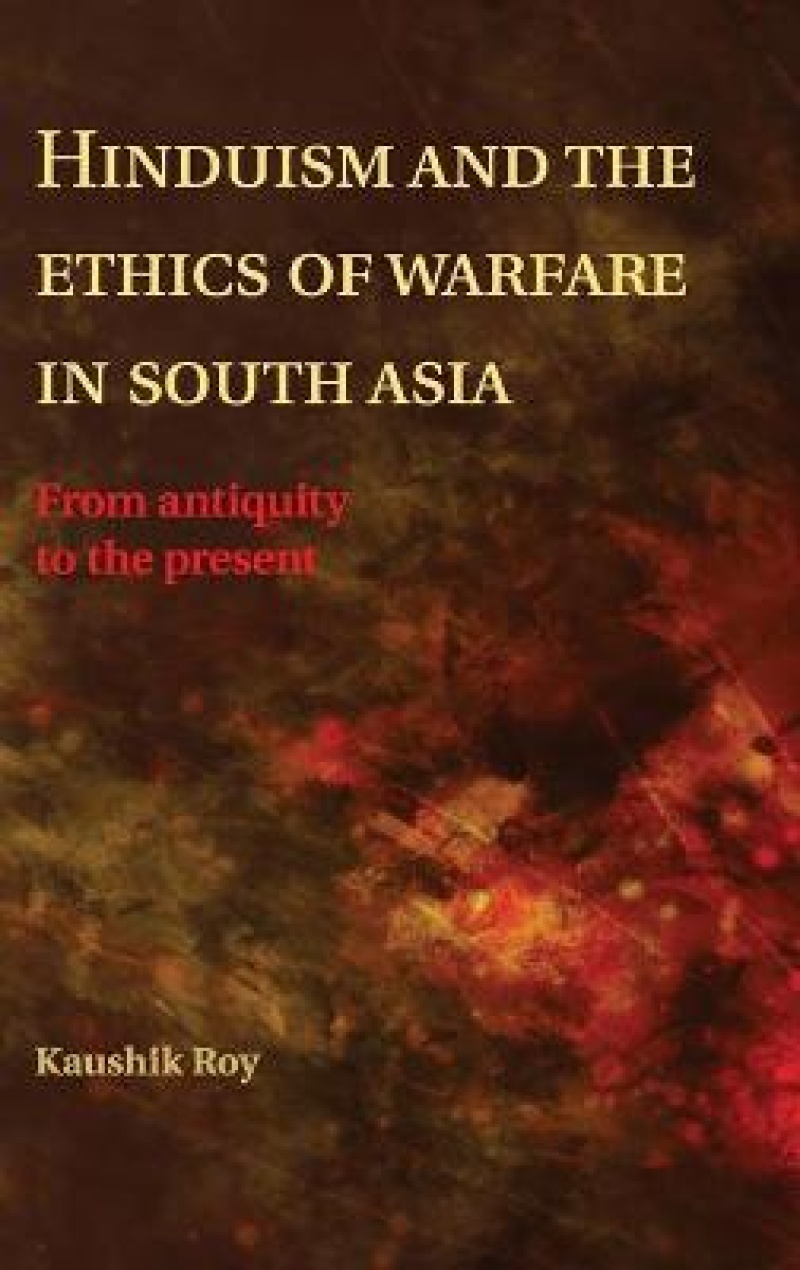

Hinduism and the Ethics of Warfare in South Asia From Antiquity to the Present
Innbundet /
2012
/ Engelsk
Product details
ISBN
9781107017368
Published
2012-10-15
Publisher
Cambridge University Press; Cambridge University Press
Weight
530 gr
Height
235 mm
Width
158 mm
Thickness
21 mm
Age
P, 06
Language
Product language
Engelsk
Format
Product format
Innbundet
Number of pages
305
Author
Biographical note
Kaushik Roy is a Reader in History at Jadavpur University in Kolkata, India, and Senior Researcher at the Centre for the Study of Civil War at the Peace Research Institute, Oslo, Norway. He is the author or editor of fifteen books and numerous journal articles, one of which won the Moncado Prize in 2006."This book challenges the view, common among Western scholars, that precolonial India lacked a tradition of military philosophy." -Military review
This book challenges the view, common among Western scholars, that precolonial India lacked a tradition of military philosophy. It traces the evolution of theories of warfare in India from the dawn of civilization, focusing on the debate between Dharmayuddha (Just War) and Kutayuddha (Unjust War) within Hindu philosophy. This debate centers around four questions: What is war? What justifies it? How should it be waged? And what are its potential repercussions? This body of literature provides evidence of the historical evolution of strategic thought in the Indian subcontinent that has heretofore been neglected by modern historians. Further, it provides a counterpoint to scholarship in political science that engages solely with Western theories in its analysis of independent India's philosophy of warfare. Ultimately, a better understanding of the legacy of ancient India's strategic theorizing will enable more accurate analysis of modern India's military and nuclear policies.
Read more
Introduction; 1. Religious ethic and the philosophy of warfare in vedic and epic India: 1500 BCE–400 BCE; 2. Buddhism, Jainism, and Asoka's Ahimsa; 3. Kautilya's Kutayuddha: 300 BCE–300 CE; 4. Dharmayuddha and Kutayuddha from the Common Era till the advent of the Turks; 5. Hindu militarism under Islamic Rule: 900 CE–1800 CE; 6. Hindu militarism and anti-militarism in British India: 1750–1947; 7. Hindu military ethos and strategic thought in post-colonial India; Conclusion.
Read more
This book traces the evolution of Hindu theories of warfare in India from the dawn of civilization.
Product details
ISBN
9781107017368
Published
2012-10-15
Publisher
Cambridge University Press; Cambridge University Press
Weight
530 gr
Height
235 mm
Width
158 mm
Thickness
21 mm
Age
P, 06
Language
Product language
Engelsk
Format
Product format
Innbundet
Number of pages
305
Author